Blog / Planning to Study Abroad? Discover Education Opportunities in Asia
Planning to Study Abroad? Discover Education Opportunities in Asia
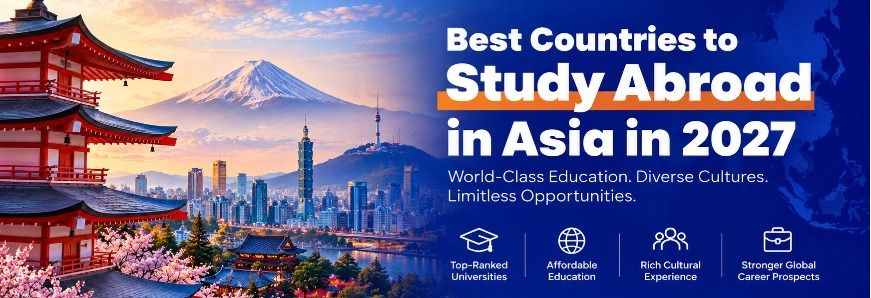
International education gives students the opportunity to explore new academic environments, experience different cultures, and prepare for future career opportunities. China, Malaysia, Singapore, Nepal, South Korea, and Egypt are destinations students can consider when planning their higher education abroad.
Each country offers a distinct environment, culture, and range of academic programmes. Understanding the country’s location, natural surroundings, education options, and admission requirements can help students make an informed decision.
China
China is located in East Asia and is one of the largest countries in the world.
China shares land borders with India, Nepal, Bhutan, Pakistan, Afghanistan, Mongolia, Russia, North Korea, and several other countries.China features a remarkable variety of natural landscapes, including the Himalayan mountain range, the Gobi Desert, forests, rivers, lakes, and extensive coastlines. Its climate varies considerably, from cold northern regions to warmer southern areas. The country also combines historic cultural sites with modern cities and advanced infrastructure.
China offers higher education programmes in fields such as medicine, dentistry, engineering, computer science, business administration, agriculture, and scientific research. Students may also explore Chinese language programmes and other specialised courses. Before applying, students should check the university’s recognition, language requirements, tuition fees, and admission criteria.

Malaysia
Malaysia is located in Southeast Asia and consists of regions on the Malay Peninsula and the island of Borneo.
Malaysia shares land borders with Thailand, Indonesia, and Brunei. Singapore is connected to southern Malaysia by a causeway and a second link.Malaysia is known for its tropical rainforests, green mountains, beautiful islands, sandy beaches, and rich biodiversity. The country generally has a warm, humid climate, with frequent rainfall in many regions. Its combination of natural scenery, multicultural communities, and modern urban areas makes it an interesting destination for international students.
Malaysia provides a range of study pathways, including foundation programmes, diplomas, undergraduate degrees, and postgraduate qualifications. Students can explore subjects such as medicine, nursing, engineering, information technology, business, hospitality, and tourism. Programme availability and entry requirements vary by institution, so students should review the details before choosing a course.

Singapore
Singapore is an island country in Southeast Asia, situated at the southern end of the Malay Peninsula.
Malaysia lies to the north, while Indonesia is located to the south and across nearby waters.Singapore is recognised for its modern skyline, carefully maintained green spaces, waterfront areas, botanical gardens, and nature reserves. Despite its urban development, the country places considerable emphasis on greenery and environmental planning. It has a tropical climate, with warm temperatures and humidity throughout the year.
Singapore offers education opportunities in areas such as business, finance, engineering, information technology, logistics, hospitality, and related professional fields. Students should compare institutions, programme structures, entry requirements, tuition fees, and available financial support before applying.

Nepal
Nepal is a landlocked country in South Asia, situated in the Himalayan region.Nepal shares borders with India and China.Nepal is famous for the Himalayas, including Mount Everest, the world’s highest mountain above sea level. Its landscapes include snow-covered peaks, green valleys, rivers, lakes, forests, and lowland plains. The country’s geography creates a wide range of climates and natural environments, making it notable for its mountain scenery and cultural heritage.
Students can explore programmes in medicine, nursing, dentistry, pharmacy, engineering, management, agriculture, and other scientific disciplines. Anyone considering a professional qualification should confirm that the institution and programme meet the recognition and licensing requirements of the country where they intend to practise.

South Korea
South Korea is located in East Asia, occupying the southern part of the Korean Peninsula.North Korea shares the peninsula to the north. China lies across the Yellow Sea, and Japan is situated across the sea to the southeast.
South Korea offers a mix of forested mountains, rivers, islands, national parks, and coastal landscapes. The country experiences four distinct seasons, including warm summers, colourful autumns, cold winters, and pleasant spring weather. Its traditional heritage exists alongside modern cities, advanced technology, and contemporary culture.
South Korea is an option for students interested in computer science, artificial intelligence, engineering, robotics, biotechnology, business, media, and design. Universities may offer programmes in Korean or English, depending on the course. Students should check language proficiency requirements, academic eligibility, tuition fees, and scholarship conditions before applying.

Egypt
Egypt is located in North Africa, connecting the northeastern part of Africa with the Middle East through the Sinai Peninsula.Egypt shares land borders with Libya, Sudan, and Israel. The Gaza Strip is also located along its northeastern border.Egypt is known for its desert landscapes, the Nile River Valley, historic monuments, and coastlines along the Mediterranean Sea and the Red Sea. Much of the country has a hot, dry desert climate, while areas near the Nile and the coast have different local conditions. Its long history and cultural heritage make Egypt distinctive among international study destinations.
Egypt offers higher education options in areas such as medicine, dentistry, pharmacy, engineering, business administration, agriculture, and science. Students should verify university recognition, course accreditation, language of instruction, total study costs, and any professional licensing requirements relevant to their future career plans.

Choose the Right Destination for Your Education
Selecting a country for higher education involves more than comparing destinations. Students should consider their academic qualifications, preferred course, language proficiency, tuition fees, living expenses, university recognition, visa requirements, and long-term career plans.
Admission requirements differ by country, institution, and programme. Checking these details before submitting an application can help students understand their options and prepare the necessary documents.
Bright Educational Consultancy assists students in exploring international education opportunities, understanding admission procedures, and preparing the required documentation. Students can contact the team for guidance on available destinations and suitable study pathways.
Bright Educational Consultancy – Branches
Thrissur Branch
2nd Floor, Trichur Trade Centre, Kuruppam Road, Thrissur – 680001.
Ernakulam Branch
2nd Floor, National Pearl Star Building, Raghavan Pillai Road, Ernakulam – 682024.
Contact: 9995909999 | 9961814999
Website: www.brightedugroup.com